Planning a Study Abroad Trip to Ghana: Requirements and Recommended Universities
Visa and residence permit steps, accreditation checks, eight universities worth shortlisting and realistic 2026 semester costs for international students heading to Accra.
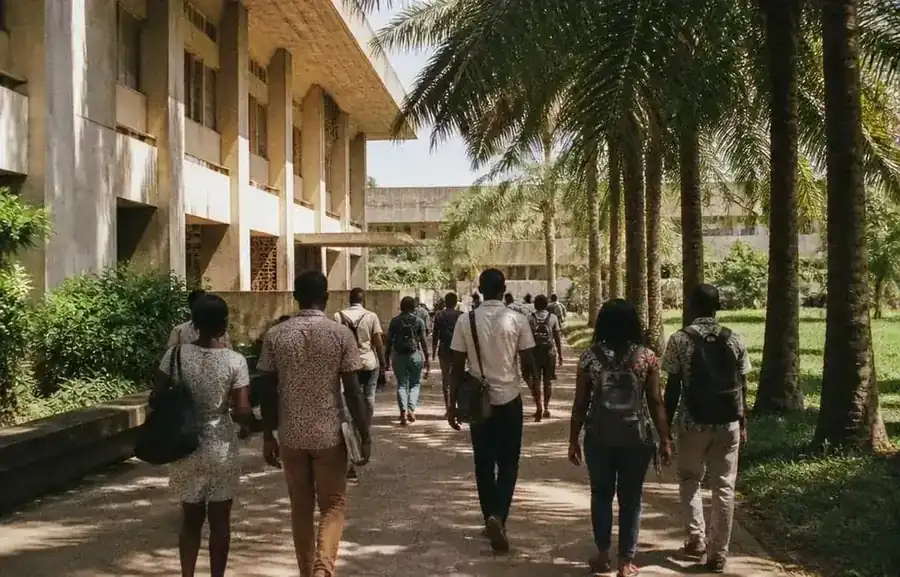
Why International Students Choose Ghana
Ghana has quietly become one of Africa's most popular destinations for study-abroad and exchange students. English is the language of instruction, the country is politically stable, the cost of living is a fraction of Europe or North America, and for students from the diaspora it offers something no classroom in Boston or London can — proximity to the history being studied.
Semester programmes in Accra typically combine coursework with fieldwork: Cape Coast and Elmina for the transatlantic slave trade, Kumasi for Asante history and craft, Volta and the north for development studies, and Accra itself for African urbanism, public health and business.
Below: the entry requirements, the universities worth a shortlist, what a semester really costs, and the paperwork order that catches most people out.
Entry Requirements for International Students
1. Admission or placement letter
You need a formal offer, either directly from a Ghanaian university or through your home institution's exchange partnership. Applications for the September intake generally close between March and June; the January intake closes around October.
2. Student visa
Apply at the nearest Ghanaian mission before you travel — students should not attempt to convert a tourist entry after arrival. Current requirements and fees are published by the Ghana Immigration Service. You will typically need:
- Passport valid at least six months beyond entry, with blank pages
- Completed visa application and passport photographs
- Admission letter from the accredited institution
- Proof of funds covering tuition and living costs
- Yellow fever vaccination certificate (mandatory)
- Return or onward ticket
- Accommodation confirmation
3. Residence permit after arrival
A student visa gets you in; a residence permit lets you stay for the academic year. Your university's international office files this with the Ghana Immigration Service within the first 30–60 days. Do not let this slide — overstaying attracts daily penalties and complicates future entries.
4. Institutional accreditation
Confirm your programme is accredited by the Ghana Tertiary Education Commission. Accreditation determines whether your credits transfer home and whether your qualification is recognised elsewhere. This is the single most important check on this page.
5. Health cover
Yellow fever vaccination is compulsory. Malaria prophylaxis, typhoid and hepatitis A are strongly recommended — see the Ghana Health Service guidance. Most universities require proof of health insurance valid in Ghana.
Recommended Universities in Accra and Beyond
| Institution | Location | Known for |
|---|---|---|
| University of Ghana, Legon | Accra | Ghana's flagship university; large international programmes office, African studies, law, business, public health |
| Ashesi University | Berekuso (30 min from Accra) | Liberal-arts core, engineering and computer science, strong reputation for ethics and entrepreneurship |
| University of Professional Studies (UPSA) | Accra | Business, accounting, marketing, professional qualifications |
| Ghana Institute of Management and Public Administration (GIMPA) | Accra | Public administration, governance, executive and postgraduate business |
| Kwame Nkrumah University of Science and Technology (KNUST) | Kumasi | Engineering, architecture, agriculture, sciences |
| University of Cape Coast | Cape Coast | Education, oceanography, tourism; adjacent to the castles |
| Academic City University | Accra | Engineering, design and innovation with a project-based model |
| Webster University Ghana | Accra | US-accredited campus, straightforward credit transfer for American students |
The University of Ghana International Programmes Office handles the largest volume of visiting students and runs its own semester-abroad track, which is the simplest route for most first-time applicants.
What It Costs
Figures below are 2026 estimates for a single international student in Accra, per semester unless noted.
| Item | Budget | Mid-range |
|---|---|---|
| Tuition (international rate, per semester) | US$1,500 – 3,000 | US$3,500 – 7,000 |
| University hostel (per semester) | US$600 – 1,200 | US$1,500 – 2,500 |
| Private shared apartment (per month) | GH₵ 2,500 – 4,000 | GH₵ 5,000 – 9,000 |
| Food (per month) | GH₵ 1,200 – 2,000 | GH₵ 2,500 – 4,500 |
| Transport (per month) | GH₵ 300 – 700 | GH₵ 1,200 – 2,500 |
| Mobile data and utilities (per month) | GH₵ 250 – 500 | GH₵ 500 – 900 |
A realistic all-in figure for a single semester, excluding international flights, is US$4,000 – 6,000 on a budget and US$8,000 – 13,000 comfortably. Our Ghana daily budget guide breaks down day-to-day costs in more detail.
Note that private rentals in Accra commonly demand 6–12 months' rent upfront. University hostels or a landlord vetted through your international office avoid that shock.
Application Timeline
- 12 months out — shortlist institutions, confirm accreditation and credit transfer with your home university.
- 9 months out — submit applications; request transcripts and references early, as certification takes time.
- 6 months out — accept the offer, pay the deposit, secure housing.
- 4 months out — apply for the student visa with the admission letter and proof of funds.
- 3 months out — vaccinations, insurance, flights.
- On arrival — orientation, residence permit filing, SIM card and bank or mobile-money setup.
- Within 60 days — residence permit issued.
Practical Life as a Student in Ghana
- Connectivity: buy a local SIM at the airport or an accredited dealer with your passport; registration is required by the National Communications Authority. Data is cheap by international standards.
- Money: mobile money is the default payment rail. Open a MoMo wallet in your first week; the Bank of Ghana licenses the providers.
- Getting around: tro-tros and shared taxis are cheapest; Uber and Bolt are the default for most students after dark. Our tro-tro guide explains the system.
- Weekends: Cape Coast, Aburi, Ada and the Volta are all reachable for a weekend. See hidden gems within two hours of Accra.
- Working: student visas do not permit paid employment. Internships must be arranged through your institution and declared.
For Ghanaians Studying Abroad Instead
If you found this page while researching the reverse journey — leaving Ghana to study overseas — that is our core service. We handle school selection, applications, statements of purpose, financial documentation and student visas.
- Study abroad consultancy — universities in the UK, Canada, USA and Europe
- Study in Malta without IELTS — direct admission route
- IELTS registration in Ghana — official test booking
- Visa requirements by country
We do not guarantee visa approval; decisions rest entirely with the issuing embassy or high commission.
Get Help Planning Your Ghana Study Trip
Whether you are an international student arriving in Accra or a Ghanaian applicant heading out, a structured plan beats a scramble. Book a paid consultation — online or at our Accra office — and we will map your timeline, documents and budget in one session.
Related Reading
- A guide to Ghanaian etiquette for international visitors
- Must-try Ghanaian street food: a safe guide
- Kotoka International Airport arrival guide
- 7-day cultural itinerary in Accra
Frequently Asked Questions
What do international students need to study in Ghana?
An admission or exchange placement letter from an accredited institution, a student visa obtained before travel, proof of funds, a yellow fever vaccination certificate, health insurance valid in Ghana, and a residence permit filed through your university within the first 30 to 60 days of arrival.
Which are the best universities in Accra for international students?
The University of Ghana at Legon, Ashesi University in Berekuso, GIMPA, UPSA, Academic City University and Webster University Ghana are the most common choices in and around Accra. KNUST in Kumasi and the University of Cape Coast are strong options outside the capital.
How much does it cost to study in Ghana as an international student?
A single semester excluding international flights costs roughly US$4,000–6,000 on a budget or US$8,000–13,000 comfortably. International tuition runs US$1,500–7,000 per semester and university hostels US$600–2,500 per semester.
Do I need a residence permit to study in Ghana?
Yes. A student visa allows entry, but a residence permit is required to stay for the academic year. Your university's international office files it with the Ghana Immigration Service within the first 30 to 60 days. Overstaying attracts daily penalties.
Can international students work in Ghana?
No. Student visas and student residence permits do not permit paid employment. Internships must be arranged through your institution and declared as part of your programme.
How do I check whether a Ghanaian university is accredited?
Verify the institution and the specific programme with the Ghana Tertiary Education Commission before paying any fees. Accreditation determines whether your credits transfer to your home university and whether the qualification is recognised internationally.