A Guide to Ghanaian Etiquette: Essential Tips for International Business Visitors
Greetings, the right-hand rule, titles, Friday prints, Accra traffic and the soft 'no' — the cultural norms that decide whether an international business trip to Ghana succeeds.
Why Etiquette Matters More Than Your Pitch Deck
Ghana consistently ranks among West Africa's most stable and welcoming business environments, and the Ghana Investment Promotion Centre registers hundreds of new foreign-partnered projects every year. But foreign visitors who arrive treating a meeting in Accra like a meeting in Frankfurt or Toronto often leave without the deal.
The reason is simple. In Ghana, relationships come before transactions. A contract is the conclusion of trust, not the beginning of it. Getting the social layer right — the greeting, the sitting, the small talk, the goodbye — is not decoration around the business. It is the business.
What follows is drawn from what we have watched work — and quietly fail — for the international teams we host in Accra each year.
Greetings: The Single Most Important Habit
Greeting is close to sacred in Ghanaian culture. Walking into a room and going straight to the point reads as rude, even aggressive.
- Greet everyone individually. In a small meeting, shake every hand in the room before you sit. In Ghana the convention is to move from your right to your left when greeting a seated row.
- Use your right hand. The left hand is considered unclean for giving, receiving, waving and eating. This applies to handing over your business card, money, a phone, or a document.
- Ask after the person, not the project. "How are you? How is the family? How was the weekend?" is the expected opening. Two or three minutes of this is normal.
- Learn one local phrase. In Accra, Ga speakers respond warmly to "Ojekoo" (good morning). Twi speakers appreciate "Maakye" (good morning), "Maaha" (good afternoon) and "Medaase" (thank you). Nobody expects fluency; the effort itself is the message.
The Ghanaian handshake often ends with a finger snap between thumb and middle finger. If your host initiates it, follow along — it signals familiarity and goodwill. If you fumble it, laugh. Nobody minds.
Titles, Seniority and Address
Ghana is a title-conscious society, and using titles correctly shows respect for hierarchy.
- Address people as Mr, Mrs, Dr, Prof, Nana, Alhaji or Honourable with the surname until invited to use a first name.
- Nana indicates traditional royalty or a chieftaincy title and should never be dropped.
- Greet and defer to the most senior person first, even when a younger colleague is your day-to-day contact.
- In meetings, decisions frequently rest with a senior figure who says little. Do not mistake silence for disengagement.
Dress Code for Business Visitors
Ghanaian professionals dress well, and visitors are judged on it.
| Setting | What to wear |
|---|---|
| Corporate meeting, bank, ministry | Long-sleeved shirt and trousers; jacket optional in Accra's heat. Women: modest dress, skirt or trouser suit |
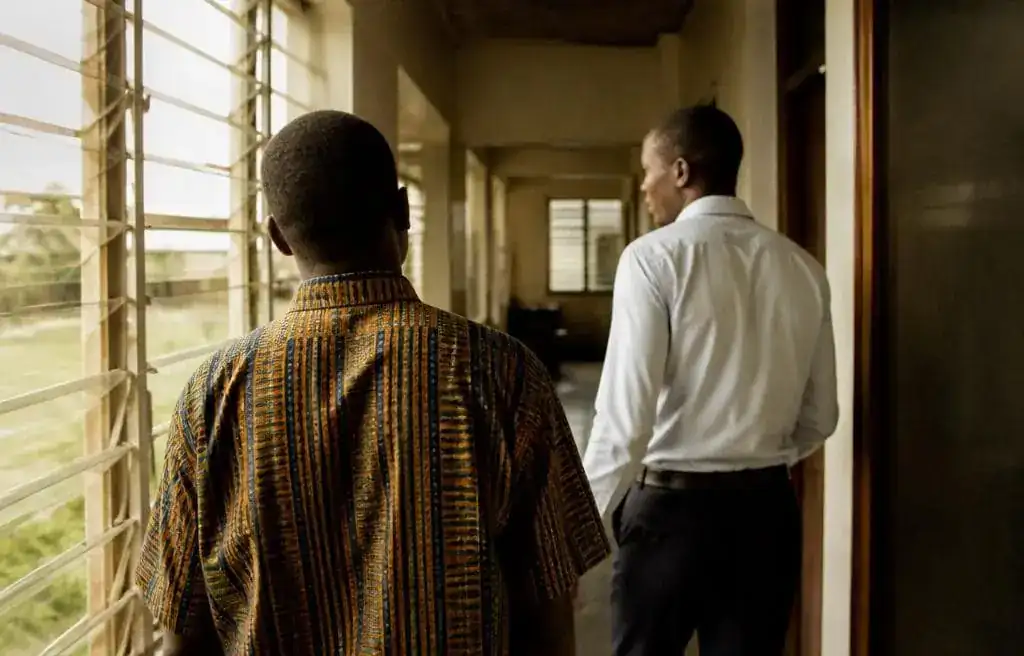
| Friday meetings | Many offices wear African print (kente, batakari, wax print). A print shirt is welcomed, never mocked |
| Site or factory visit | Smart casual, closed shoes, long trousers |
| Traditional or chieftaincy visit | Conservative and covered; remove hats. Avoid black and red unless attending a funeral |
| Funeral (very common business obligation) | Black and red, or black and white for a celebration of an elderly life |
Shorts on adult men in a professional setting read as beachwear. Avoid them entirely.
Time, Punctuality and "Ghana Man Time"
Foreign visitors hear about "Ghana Man Time" and draw the wrong conclusion. The rule that actually applies:
- You arrive on time. Punctuality from a visitor signals seriousness.
- Your host may not. Accra traffic on the Spintown, Tetteh Quarshie and Kaneshie corridors is genuinely unpredictable, and 30–45 minutes of drift is common.
- Build slack into your schedule. Two substantive meetings a day in Accra is a realistic plan. Four is a fantasy.
- Never show visible irritation at a delay. It costs you more than the lost time does.
If your programme is tight, a chauffeured vehicle removes most of the risk — our car rental with driver service exists largely because visiting delegations kept missing meetings in taxis.
Meeting Conduct
- Small talk first, always. Football, weather, the state of the roads, Ghanaian food. Ten minutes is not wasted.
- Accept the water or the drink you are offered. Refusing outright can read as rejecting hospitality; take it even if you barely touch it.
- Business cards are exchanged with the right hand or both hands. Read the card before pocketing it.
- Avoid aggressive negotiation. Direct confrontation, raised voices and hard ultimatums damage relationships permanently. Disagreement is expressed indirectly — "we will look into it", "it may be difficult" often means no.
- Expect indirect refusals. A Ghanaian counterpart is unlikely to say a flat "no" to your face. Learn to hear the softened version.
- Photographs of people, markets, military installations and government buildings require permission. Never photograph the Jubilee House area or airport security zones.
Religion and Conversation
Ghana is deeply religious — predominantly Christian in the south, with a large Muslim population in Accra, Kumasi and across the north. Meetings often open or close with a prayer, and this is entirely normal.
Safe conversation: football (especially the Black Stars), Ghanaian food, music, family, your impressions of Accra, the weather.
Handle with care: party politics (NPP vs NDC is a live wire), tribal or ethnic comparisons, criticism of Ghana's infrastructure, comparisons to neighbouring countries, colonial history handled flippantly.
Gifts, Tipping and Money
- Small gifts from your home country are appreciated, presented with the right hand. Avoid anything extravagant, which can look like an inducement.
- Tipping: 5–10% in restaurants where service is not included; GH₵ 20–50 for a driver on a full day; GH₵ 10–20 for a hotel porter.
- Ghana's currency is the cedi and cash still matters. Mobile money (MTN MoMo, Telecel Cash) is accepted almost everywhere and is the fastest way for a visitor to pay small amounts. Rates and licensing are overseen by the Bank of Ghana.
- Never hand money to anyone claiming to expedite an official process. Report solicitations rather than paying.
Entry Formalities for Business Visitors
Most nationalities require a visa to enter Ghana. Business travellers should confirm current entry rules with the Ghana Immigration Service and note that a yellow fever vaccination certificate is mandatory on arrival — the Ghana Health Service publishes current requirements.
Practical notes:
- Carry your invitation letter from the Ghanaian host company; immigration officers ask for it.
- Business visas typically permit meetings and negotiations but not paid work. A work permit is a separate process.
- Keep your passport valid for at least six months beyond your entry date.
If your team is travelling in the other direction — Ghanaians visiting partners abroad — our visa assistance service handles the documentation and the visa requirements hub sets out what each destination expects.
Ten Rules to Memorise Before You Land
- Greet before you speak, every time, everyone.
- Right hand only for giving and receiving.
- Use titles until told otherwise.
- Dress a level smarter than you would at home.
- Be on time; forgive lateness in others.
- Accept hospitality.
- Never raise your voice.
- Listen for the soft "no".
- Avoid party politics and ethnic comparisons.
- Say goodbye properly — leaving abruptly undoes a good meeting.
Planning a Business Trip to Accra
Most delegations underestimate logistics and overestimate how many meetings fit in a week. We arrange airport transfers, chauffeured vehicles, hotel positioning near your meeting cluster, and cultural briefings for teams visiting Ghana for the first time.
If you are still at the planning stage, our travel consultation service helps you sequence a realistic itinerary, and the Ghana visitor guide covers arrival practicalities.
Related Reading
- Kotoka International Airport arrival guide — SIM cards, Wi-Fi and transfers on day one.
- How to navigate Accra's tro-tro system — useful context even if you never board one.
- Must-try Ghanaian street food: a safe guide — for the client dinner that goes off-menu.
- Budgeting for Ghana in 2026 — realistic daily costs.
Frequently Asked Questions
What is proper business etiquette in Ghana?
Greet every person in the room individually before discussing business, use only your right hand to give and receive, address people by their title and surname until invited otherwise, dress smartly, arrive on time yourself and stay patient when hosts are delayed by Accra traffic.
Why is the left hand considered rude in Ghana?
The left hand is traditionally reserved for personal hygiene, so it is considered unclean for social exchange. Always hand over business cards, money, documents, gifts and food with your right hand, and eat with your right hand when eating without cutlery.
How should I dress for a business meeting in Accra?
A long-sleeved shirt and trousers for men, a modest dress or trouser suit for women. A jacket is optional in the heat. On Fridays many Ghanaian offices wear African print, and a print shirt is welcomed. Shorts are never acceptable in a professional setting.
Is punctuality important in Ghana?
You should always arrive on time, but expect hosts to run 30 to 45 minutes late because Accra traffic is unpredictable. Schedule no more than two or three substantive meetings a day and never show visible irritation at a delay.
What topics should I avoid in conversation in Ghana?
Avoid party politics (NPP versus NDC), ethnic or tribal comparisons, flippant remarks about colonial history and criticism of Ghana's infrastructure. Football, food, family, music and your impressions of Accra are all safe and welcome subjects.
Do I need a visa to visit Ghana for business?
Most nationalities do. Apply through a Ghanaian mission before travel, carry your host company's invitation letter, and note that a yellow fever vaccination certificate is mandatory on arrival. A business visa allows meetings and negotiations but not paid work.