Why Your \"Too Good to Be True\" Vacation Package Might Be a Ghost Booking
A cheap all-inclusive deal, a confirmation PDF, a seller who replies in seconds — then nothing. How ghost bookings are made, why the price gives them away, and how to verify flights and hotels yourself before paying.
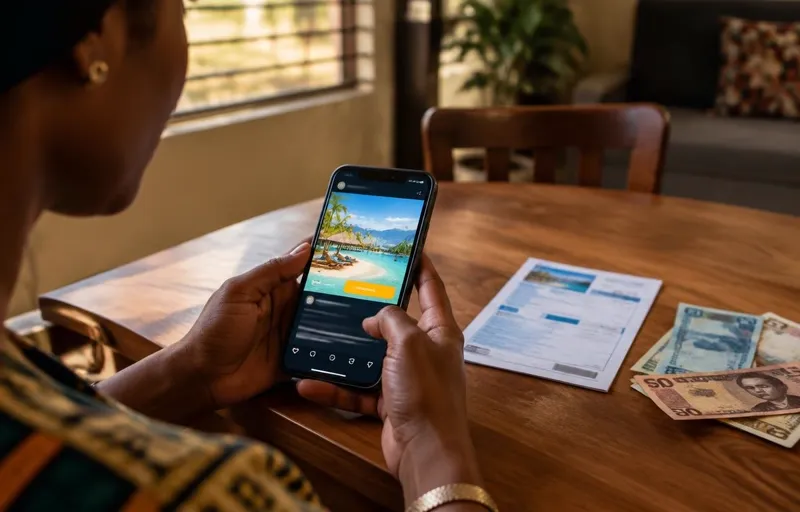
It usually starts with a beautifully edited video: white sand, an infinity pool, "Dubai 5 nights all-inclusive — GHS 6,500, flight included, only 4 slots left!" The comments are full of heart emojis. The seller replies within seconds. Two weeks later the "agent" has blocked your number, the hotel has never heard your name, and the flight reference on your itinerary does not exist. That is a ghost booking — a trip that was only ever real on a screenshot.
This article explains why a holiday package that looks too good to be true often is, how ghost bookings are manufactured, and the simple checks that expose them before your money leaves your MoMo wallet or bank account.
What Exactly Is a Ghost Booking?
A ghost booking is a reservation that appears confirmed but was never made — or was made and then cancelled the moment the scammer was paid. It comes in three common forms:
- The phantom package: the hotel, flight and transfers are all invented. The "confirmation" is a doctored PDF.
- The cancelled-after-payment booking: a real reservation is made with a refundable fare or "pay at hotel" room, sent to you as proof, then cancelled once your money arrives. You discover it at check-in.
- The stolen-card booking: a real booking paid with stolen card details. It works until the card owner disputes the charge — sometimes while you are already abroad — and the airline or hotel voids it.
All three look identical on WhatsApp. That is the point.
Why the Price Is the First Warning Sign
Legitimate operators work with thin margins on flights and hotels. Airlines price fares by demand, hotels publish their rates, and taxes are non-negotiable. When a package costs dramatically less than the flight alone on the airline's own website, someone is not paying for something — and it is usually going to be you.
Spend five minutes pricing the components yourself:
- Search the same dates directly on the airline's website.
- Look up the named hotel's own rate for those nights.
- Add airport transfers and any visa fee.
If the "all-inclusive" package is cheaper than the flight on its own, treat it as a ghost booking until proven otherwise.
The Psychology Ghost Sellers Use
Ghost bookings succeed because they target emotion, not logic:
- Artificial scarcity: "Only 3 slots left", "Promo ends tonight." Pressure stops you from checking.
- Social proof you cannot verify: testimonial screenshots, staged "happy clients" videos and bought followers.
- Festive timing: offers spike before Christmas, Easter, Eid and the summer holidays, when families are eager to book.
- Payment friction removal: "Just send a deposit to secure your slot" — always to a personal MoMo number or private account.
If a seller is rushing you, the rush is the product.
How to Verify a Package Before You Pay
You do not need to be a travel expert to expose a ghost booking. You need to check each piece independently — never through links or numbers the seller provides.
1. Verify the flight yourself
Every genuine airline booking has a six-character booking reference (PNR). Go to the airline's official website, open "Manage booking" and enter the reference with your surname. If it does not load, there is no seat.
2. Call the hotel directly
Find the hotel's number on its own official website — not on the itinerary you were sent — and ask them to confirm the reservation name and dates.
3. Check who you are paying
Legitimate companies take payment through company bank accounts or official merchant channels in the business name. A personal MoMo number or an individual's bank account is the single strongest red flag in Ghanaian travel fraud.
4. Confirm the company exists offline
Can you visit a physical office? Is the business registered and licensed? In Ghana, travel and tour operators should be licensed by the Ghana Tourism Authority, the body that regulates tourism enterprises under the Tourism Act.
5. Search the seller's name with "scam" or "fraud"
Thirty seconds of searching can save you thousands of cedis. Check consumer warnings too: the UK's Action Fraud holiday fraud guidance lists the same patterns we see in Accra.
What to Do If You Have Already Paid
Act quickly — every hour matters:
- Contact your bank or mobile money provider immediately and ask them to flag or reverse the transaction.
- Keep everything: screenshots, chat logs, payment receipts, the seller's profile link and phone number.
- Report it to the Cyber Security Authority of Ghana, which runs the national cybercrime incident reporting channel, and to the police.
- Report the account on the platform where you found the offer, so others are protected.
- Do not pay "release fees" — a second scammer often appears claiming they can recover your money for a charge.
Where a Genuine Package Is Different
A legitimate package should come with a written itinerary, named hotels you can verify, a flight reference you can check yourself, clear inclusions and exclusions, and payment to an official company channel with a receipt. Nothing about it should depend on you acting before you can think.
At Secure Travel and Tours we have operated from our Dansoman office in Accra since 2015, and you can walk in, meet the team and see our paperwork before you commit. We never ask clients to pay into personal MoMo or personal bank accounts. Our Ghana tour packages are booked on our own website — tour requests carry no upfront payment — and our flight and visa services are explained on our services page. If you have been sent an offer using our name, check it against our official fraud alert page first.
Before You Book Your Next Holiday
Run every deal through four questions:
- Is it cheaper than the flight alone?
- Can I verify the flight and hotel without the seller's help?
- Am I paying a company, or a person?
- Am I being rushed?
If any answer worries you, stop. You can confirm who we are on our Secure Travel and Tours company page, call 020 444 4220 or email info@securetravelandtours.com — our only official contact details.
Disclaimer: This article is general consumer guidance, not legal advice. Prices and examples are illustrative. Where visas are involved, we do not guarantee visa approval; decisions rest solely with the relevant embassy.
Frequently Asked Questions
What is a ghost booking?
A ghost booking is a holiday reservation that looks confirmed but was never made, or was cancelled as soon as the seller was paid. The flight reference, hotel confirmation or itinerary exists only as a screenshot or edited PDF.
How can I check if my flight booking is real?
Take the six-character booking reference and your surname to the airline's official website and open 'Manage booking'. Never use a link the seller sends. If the booking does not load, there is no seat.
Why is paying into a personal MoMo number a red flag?
Legitimate travel companies receive payments through company accounts or official merchant channels in the business name. A personal MoMo or private bank account leaves you with no business to hold responsible. Secure Travel and Tours never uses personal accounts for official transactions.
What should I do if I paid for a fake holiday package?
Contact your bank or mobile money provider immediately, keep all chats and receipts, report the incident to the Cyber Security Authority of Ghana and the police, and report the seller's account on the platform. Ignore anyone who offers to recover your money for a fee.
How do I confirm a travel agency in Ghana is genuine?
Visit its physical office, ask for its registered company name and Ghana Tourism Authority licence, check independent reviews, and make sure payment goes to a company channel with a receipt. You can verify Secure Travel and Tours at our Dansoman office or on 020 444 4220.